Low-Maintenance Fencing That Resists Weather Damage
Vinyl Fence Installation in Lebanon for homeowners seeking long-term fencing with minimal upkeep and resistance to rot, insects, and color fading
Vinyl fencing eliminates the rot, insect damage, and recurring maintenance that wood fences require, making it the preferred choice for homeowners who want a permanent structure that maintains its appearance without annual staining, sealing, or board replacement. Wilson County Fence Co installs vinyl fences in Lebanon and across Middle Tennessee for properties where long-term durability and ease of maintenance outweigh the natural appearance and customization options wood provides. Available in multiple colors and styles, vinyl fences suit residential yards where clean, modern aesthetics and minimal ongoing care define the project's priorities.
The material resists moisture absorption entirely, preventing the swelling, warping, and decay that affect wood fences exposed to Middle Tennessee's humid climate and seasonal rainfall. Insects cannot burrow into or damage vinyl, and the color runs through the entire material rather than existing as a surface coating, meaning scratches and scuffs remain less visible than on painted or stained wood surfaces.
Request an estimate to compare vinyl options, colors, and styles based on your property's layout and aesthetic preferences.
What You Notice Once Vinyl Fencing Is Installed
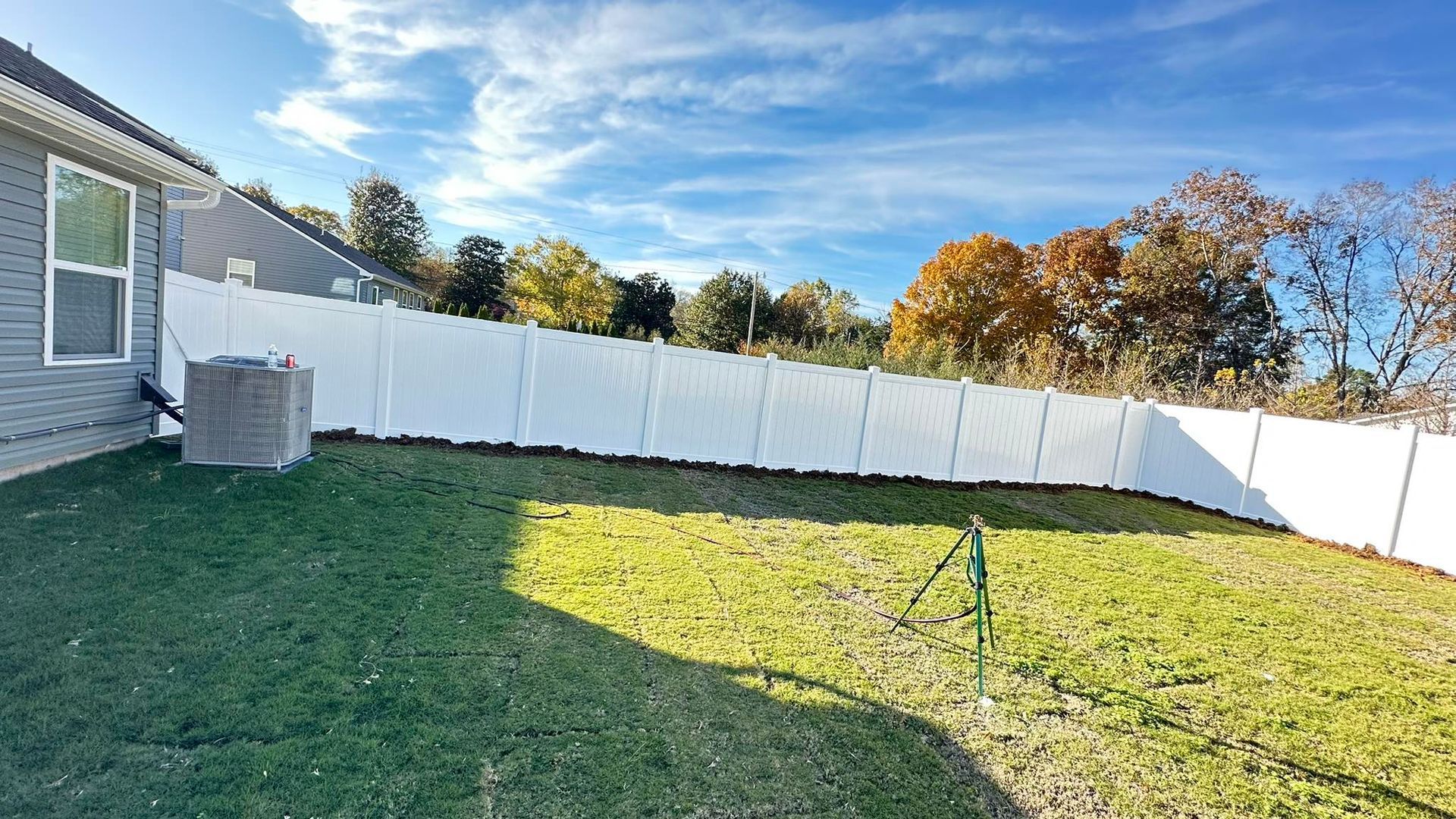
Vinyl fence panels lock together with interlocking rails and posts that create a seamless appearance without visible fasteners or hardware, producing clean horizontal and vertical lines across the fence structure. The surface remains smooth and uniform, with no grain patterns, knots, or natural imperfections to interrupt the color or texture. Cleaning requires only a garden hose or pressure washer to remove dirt, pollen, and mildew buildup, and the material does not absorb stains from soil, vegetation, or water runoff.
The fence retains its original color for years without fading, eliminating the need for repainting or restaining that wood fences require to maintain appearance. Gates operate smoothly with stainless steel or powder-coated hardware that resists rust, and the rigid panel construction prevents sagging or bowing even in sections spanning longer distances between posts. You also avoid splinters, rough edges, or surface deterioration that wood develops as it weathers and ages.
Vinyl fencing comes with warranties that cover material defects, cracking, and discoloration, though UV exposure over decades can cause some brittleness in lower-quality vinyl. Higher-grade vinyl formulations include UV inhibitors that slow this process, maintaining flexibility and impact resistance longer than economy-grade options.
Answers to Frequent Vinyl Fence Questions
Vinyl fencing offers clear maintenance advantages, but understanding its limitations, cost factors, and performance characteristics helps you decide whether it fits your property's needs better than wood or metal alternatives.
What maintenance does vinyl fencing require after installation?
Vinyl requires only periodic washing with soap and water or a pressure washer to remove surface dirt and mildew, with no staining, sealing, or painting needed to maintain appearance or structural integrity.
How does vinyl fencing perform in Lebanon's summer heat and winter cold?
Vinyl expands and contracts slightly with temperature changes, which is accounted for during installation by leaving small gaps between panels and posts, preventing buckling in heat or cracking in freezing temperatures.
What color options are available for vinyl fencing?
White, tan, and gray are the most common vinyl fence colors, with some manufacturers offering wood-grain textures or darker shades, though color selection is more limited compared to the infinite stain and paint options wood fences allow.
Why does vinyl fencing cost more upfront than wood?
Vinyl material and manufacturing costs exceed pressure-treated lumber, but the total cost over the fence's lifespan often favors vinyl due to eliminated maintenance expenses, no replacement boards, and no recurring staining or sealing.
How long does vinyl fencing last compared to wood?
Vinyl fences typically last twenty-five to thirty years or more without structural failure, significantly outlasting wood fences, which require board replacement and post repairs as rot and moisture damage accumulate over fifteen to twenty years.
Wilson County Fence Co installs vinyl fencing for homeowners in Lebanon who want a permanent, low-maintenance solution that eliminates the upkeep wood requires. Contact the team to review vinyl styles, color options, and receive a detailed project estimate based on your property's fence line.